
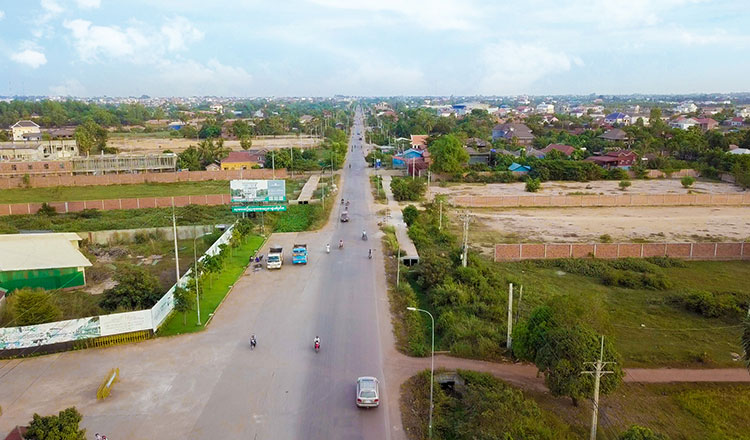
For Siem Reap – Compactness is the way
You may be wondering: would prioritising compactness lead to the construction of taller buildings in Siem Reap? The answer is no in my opinion. Efforts to limit sprawl, paradoxically, do not always directly lead to skyscrapers – as evident in Barcelona (see last week’s article link).
Compactness means intensifying the usage of space in an urban area. Buildings should be mixed-use and multi-purpose, containing housing, restaurants, grocery stores, etc. Following a compact model would mean that developers avoid creating spaces which only have limited usage like garages and golf courses. Instead, public spaces, plazas, and parks that serve all manners of social, cultural, leisure and economic functions should be prioritised.
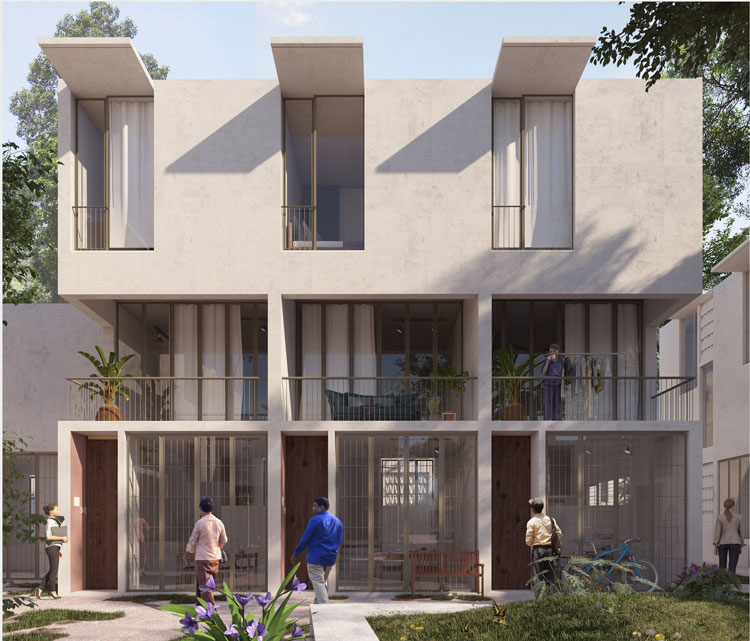
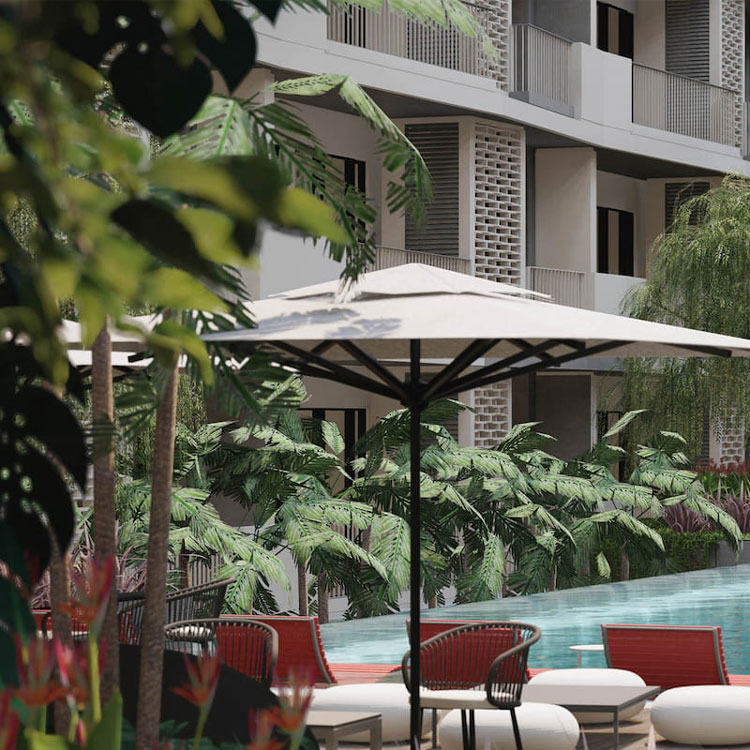
Encouragingly, several developers already embrace the value of compact and mixed-use development. There are excellent examples that demonstrate the convenience and attractiveness achieved by designing residences in human-scaled, walkable, and mixed-use developments, are:
Likewise, transportation must also be condensed. The construction of endless highways, swathes of parking lots and countless garages should be avoided. Instead, space for commuting should be condensed into more efficient modes like bus transitways, cycling lanes, and pedestrian corridors which carry more traffic, are cheaper to operate and more sustainable to maintain.
Compactness simply calls for the intensification of usage of space we already occupy, which in turn decreases demand to build tall or build sprawl to begin with.
Achieving compactness in Siem Reap calls for carefully designed neighbourhoods which are mixed-use, walkable, contain a myriad of people-centred spaces and are integrated with an efficient transportation system. One critical policy tool to ensure Siem Reap develops in such a manner is a mobility-based land-use master plan.
Correct Land-use Planning is Key
A planning policy where land use is based on mobility profiles means that a building’s placement would take into account how users commute to and from it, and the intensity of traffic generated by users of that space. The advantage of a mobility profile allows planners to distinguish between buildings which generate different amounts and different types of traffic.
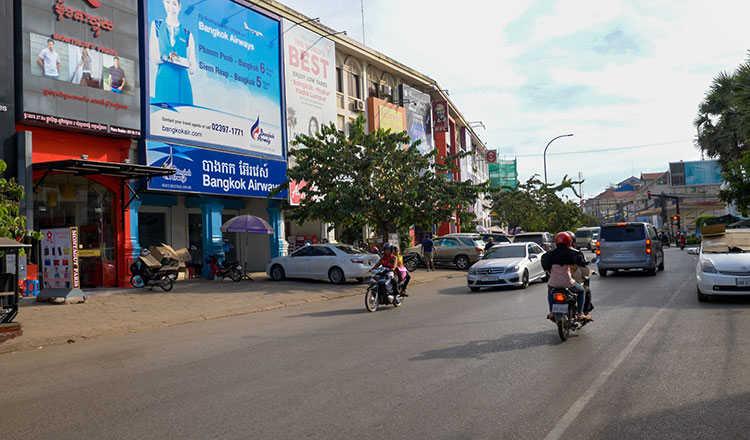
Small shops, food and beverage establishments, and retail stores where users can arrive by foot would fall into a “light” traffic zone, characterised by prioritizing public transit and active commuting. Siem Reap’s centre with its many small streets like Pub Street and Sok San Road is home to many such establishments and therefore should be categorised accordingly.
Furthermore, areas along the Siem Reap River stretching from Wat Damnak to Wat Preah Enkosey should impose a “restricted” traffic zone where no vehicular traffic is allowed; except for emergency and public services vehicles. This is especially relevant in fostering social, cultural, and economic activity in the heart of the city, as well as enlarging the public space inhabitants and tourists can enjoy.
For buildings which require frequent vehicle access, Siem Reap planners can designate zones of “heavy” traffic located along major roadways. Such “heavy” traffic zones should be located away from the city centre and be limited to a few areas to avoid conflict with other zones. This planning tool also helps streamline traffic by restricting sites that generate heavy vehicle traffic from being located near intersections where they would dramatically impact traffic flow.
Making land-use decisions based on impacts on urban mobility is preferred compared to the current land-use masterplan for the city, which strictly adheres to traditional zoning practices of categorising zones by their expected function, i.e residential, commercial, industrial, etc.
In essence, a mobility profile allows planners to tailor Siem Reap’s buildings to work with the local street network and its transportation plans.
For Siem Reap to Thrive
Despite sounding contradictory, it is possible for Siem Reap to grow and prosper while also preserving its unique blend of characteristics. A mobility-based land-use policy would allow planners to better adapt growth around the unique needs of Siem Reap, maximising livability, and negating negative impacts on the traditional feel of the city.
This compact form of urbanism, coupled with public transit and active commuting can minimise the need for the current levels of expansion which threaten Siem Reap’s small-town atmosphere, its priceless cultural sites, as well as the fragile ecology of the province as a whole.